



Sea of Cortez Research Center (Gran Acuario Mazatlán Mar de Cortés) — Mazatlán, Mexico
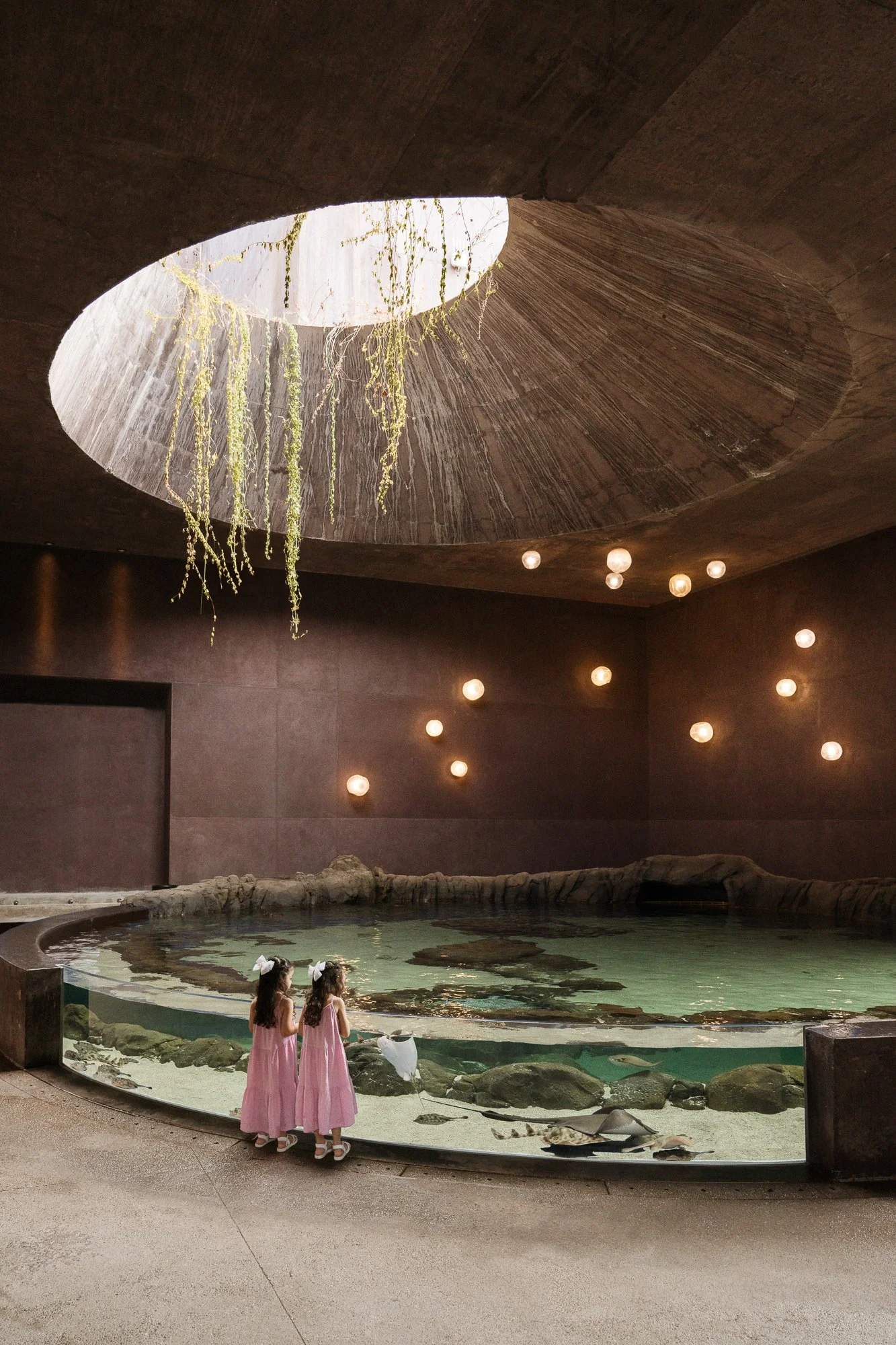
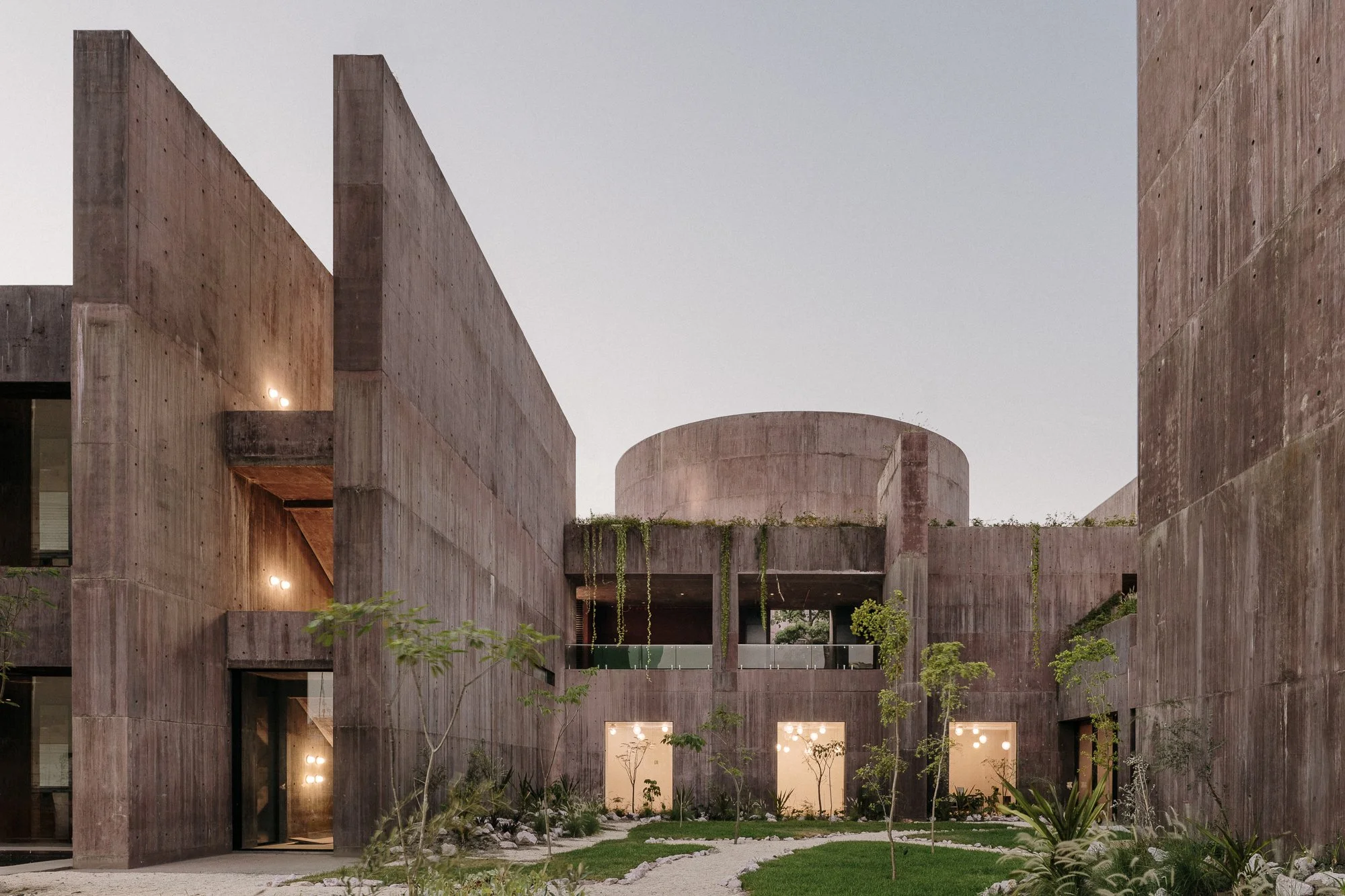
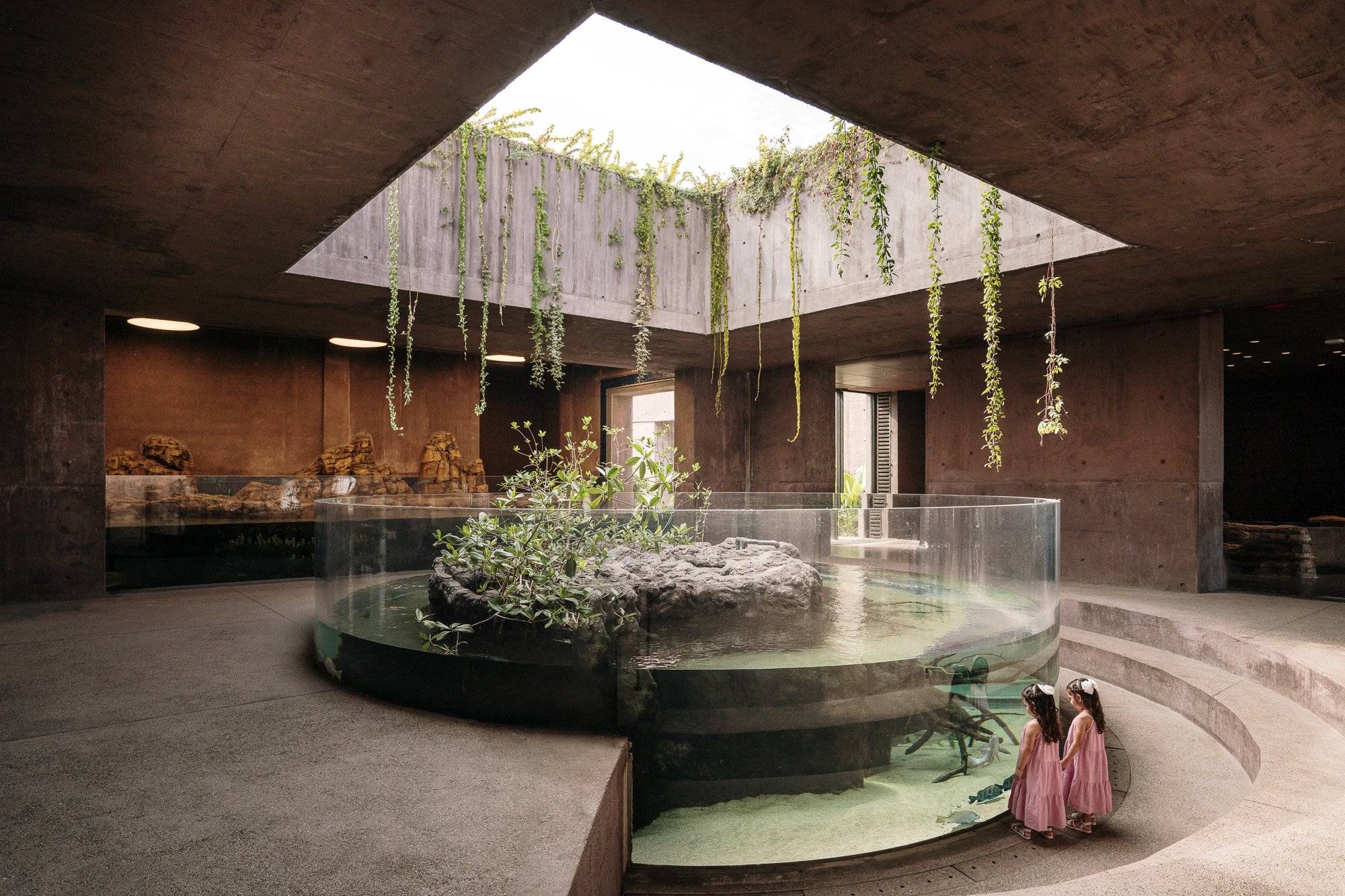
The Sea of Cortez Research Center—the Mazatlán Aquarium project designed by Tatiana Bilbao ESTUDIO—is conceived to read as a discovered “ruin” inhabited by water, vegetation, and wildlife: a sequence of tall, pigmented concrete walls and orthogonal volumes that choreograph one-point perspectives, courtyards, and dramatic oculi, delivering daylight to key moments in the visitor journey.
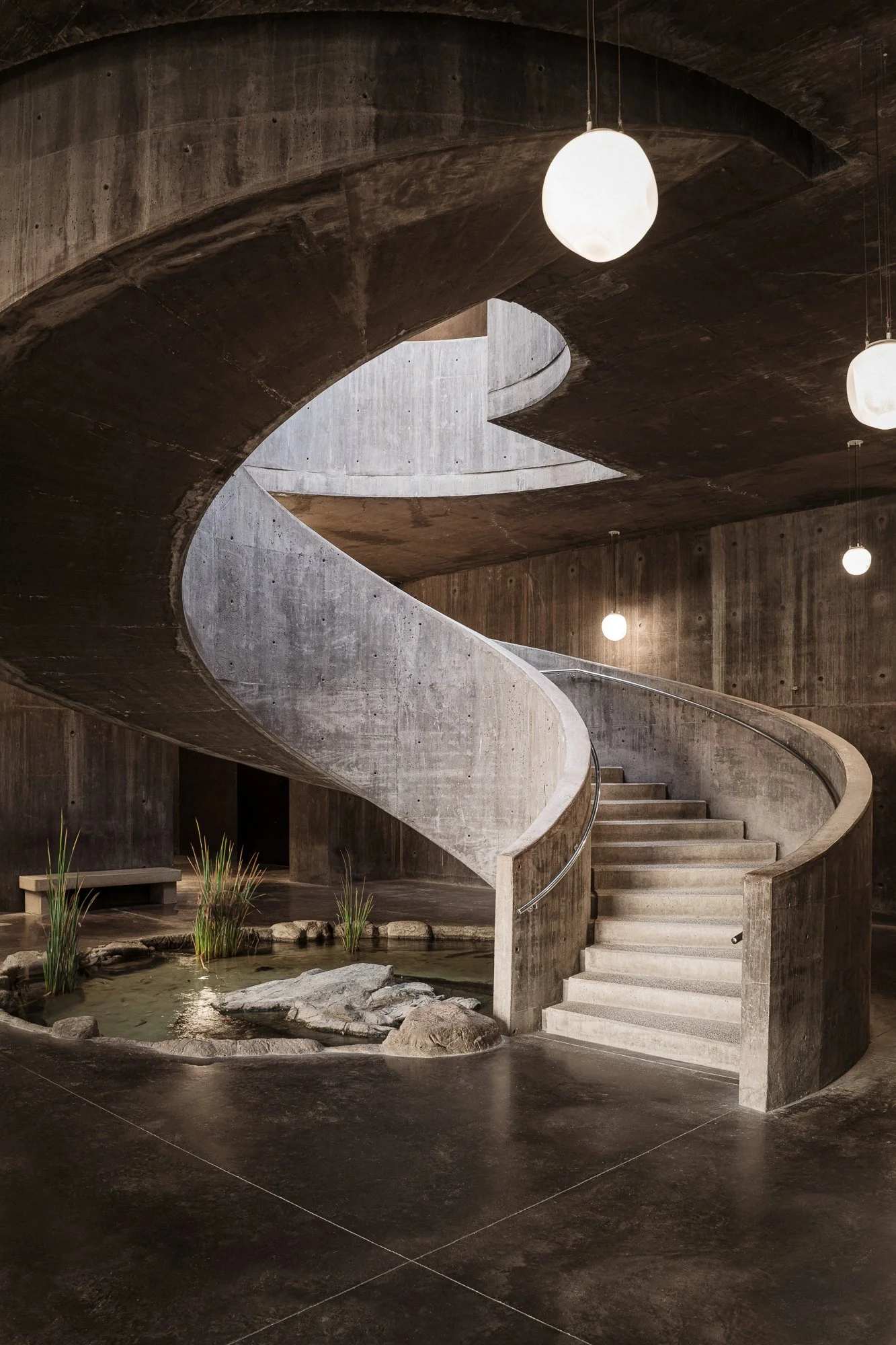
From a lighting perspective, the project demands a dual calibration: human legibility and theatricality for circulation and public rooms, and biologically appropriate light for marine life and underwater perception. The strategy maintains very low ambient levels throughout exhibit zones so the primary visual hierarchy remains with the tanks, while accounting for how light behaves differently underwater—including shifts in apparent color and contrast with depth. A notable architectural-lighting gesture is the integration of custom elements—free-form glass lanterns described as jellyfish-like—used as luminous markers within interstitial spaces, reinforcing the Sea of Cortez narrative while remaining consistent with the building’s raw concrete tectonics. Ultimately, the lighting is not only animal-centric: it supports visitor orientation, anticipation, and emotional pacing—balancing stewardship with a carefully staged public experience.
Location: Mazatlán, Mexico
Architect: Tatiana Bilbao Estudio
Landscape Architect: Entorno
Exhibit Design: Space Haus
Photography: Juan Manuel McGrath, IG: @jmphotography_mx